Choose timezone
Your profile timezone:
영수증 발급 요청은 icabu-2025@postech.ac.kr 메일로 요청주시면 순차적으로 회신드리겠습니다. 메일 주실 때 자신의 영문 이름과 소속을 같이 보내주시면 감사하겠습니다.
The JKPS special issue submission period has been extended to January 31. JKPS 특별호 제출 기간이 1월 31일까지로 연장되었습니다.
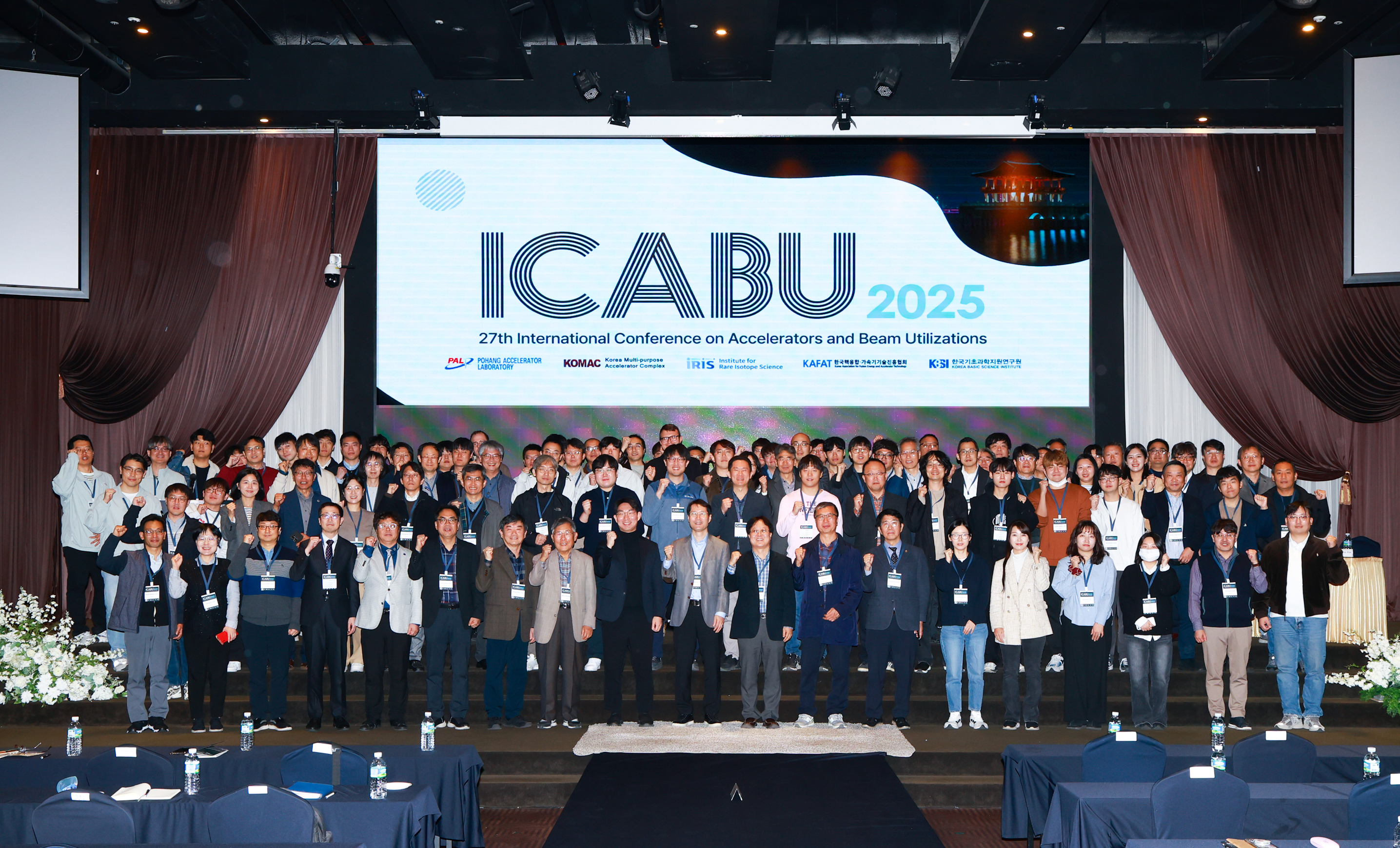
We are pleased to announce that the 27th International Conference on Accelerators and Beam Utilizations (ICABU2025) will be held from November 12 to 14, 2025 at the Lahan Hotel Pohang, Korea.
Traditionally, the conference has covered emerging issues in advanced accelerator technologies and utilizations of photons, electrons, protons, neutrons, and ions in a wide range of research fields, ranging from NT, BT, IT, ET, ST, RT, medical applications, materials science, to basic science. While keeping its own spirits, this conference will shed light on the major accelerator projects, bio-medical applications and industrial applications through the plenary sessions and dedicated parallel sessions.
The plenary sessions review the major accelerator projects, the latest status and perspectives of applications of accelerators and particle beams. Parallel sessions are organized to present intriguing developments or issues in accelerator technologies, synchrotron light applications, and particle beam applications of accelerators. In addition, a poster session is formulated through which in-depth technical discussions are initiated based on expertise in the wide range of research fields.
All the authors are strongly encouraged to prepare a manuscript of their papers. The conference's scientific review committee will review all the manuscripts, and selected papers are to be published in a special issue of the Journal of Korean Physical Society (JKPS), if accepted, which will replace the conference proceedings.

|

|

|

|

|

|

|

|

|

|

|
Electron scattering is a powerful tool for studying nuclear structure, because it allows model-independent studies of nuclear structure. For example, the charge density distribution of nuclei can be determined very accurately by electron elastic scattering. Therefore, electron scattering has been long awaited in the study of unstable nuclei, especially short-lived unstable nuclei.
To realize electron scattering with unstable nuclei, a new ion trapping method, Self-Confining Radioactive Isotope Ion Target (SCRIT) method, was developed.[1] After demonstrating the principle of the SCRIT method, the SCRIT electron scattering facility was constructed at RIKEN RI Beam Factory in 2009.[2] The SCRIT facility consists of an electron accelerator, an electron storage ring equipped with the SCRIT system, an online isotope separator, and an electron spectrometer besides the SCRIT system. Produced Radio Isotope (RI) beams are injected to the SCRIT system and RIs trapped inside the SCRIT system play as stationary targets. Electron beam stored in the ring are scattered from the RI targets and analyzed by the spectrometer.
After the success of the commissioning experiment using Xe [3] and the development of the RI production, the world's first electron scattering experiment using online-produced unstable nuclei was successfully conducted using Cs beam in 2022.[4] For the next stage, the upgrade of the SCRIT facility is underway for electron scattering off Sn, which is a iconic nuclei. In this contribution, we will report details of the first experiment, and the present status and perspective of the SCRIT facility.
[1] M. Wakasugi, T. Suda, and Y. Yano, Nucl. Instr. and Meth. A532, 216 (2004).
[2] M. Wakasugi et al., Nucl. Instr. and Meth. B317, 668 (2013).
[3] K. Tsukada et al., Phys. Rev. Lett. 118, 262501 (2017).
[4] K. Tsukada et al., Phys. Rev. Lett. 131, 092502 (2023).
Continuous advancement in nonvolatile and morphotropic beyond-Moore electronic devices requires integration of ferroelectric and semiconductor materials. The emergence of HfO2-based ferroelectrics that are compatible with atomic-layer deposition has opened interesting and promising avenues of research. However, the origins of ferroelectricity and pathways to controlling it in HfO2 are still mysterious. In this presentation, I will present how we are able to stabilize ferroelectric orthorhombic phase in these materials by defect engineering via local He ion beam irradiation and discuss the possible competing mechanisms for resulted highly enhanced ferroelectricity [1]. We first examine feasibility of defect engineering via local He ion beam irradiation using prototypical two-dimensional (2D) transition metal dichalcogenides (TMD) MoTe2. Then, we investigate how controlled irradiation influences on the ferroelectric phase in HfO2-based materials. Our piezoresponse force microscopy results indicate that the amplitude of piezoresponse in the ion irradiated region increased by approximately twofold compared with that in the pristine region and the scanning transmission electron microscopy results show a homogeneous distribution of oxygen vacancies and a phase transition to the ferroelectric phase. These findings both reveal the origins of ferroelectricity in this system and open pathways for nano-engineered binary ferroelectrics.
The Seoul National University Hospital (SNUH) Heavy Ion Therapy Gijang Center is a national project aiming to begin treatment at the end of 2027. This project, which began in 2010 at the Korea Institute of Radiological and Medical Sciences (KIRAMS), was transferred to SNUH in May 2019. A contract with Toshiba was signed in September 2020, and it had been decided to install the synchrotron in the completed building previously planned for a cyclotron. A new gantry treatment room also has been built connecting to the existing building. Construction of the gantry room expansion has been completed in April 2025, and equipment installation has begun in May 2025. Equipment installation is scheduled until May 2026, with beam tuning beginning in February or March 2026 and expected to be completed by April 2027. Following the completion of the Acceptance Test Procedure (ATP) in May 2027 and several months of commissioning, simultaneous treatment of the horizontal port and gantry port is planned to be started at the end of 2027. This project will involve both carbon and helium ions, and the installation of a research beamline in the remaining bunker is under consideration. This presentation will briefly outline the current status of SNUH Heavy Ion Therapy Gijang Center.
Prof. Ji-Gwang wang (GWNU)
X-Ray Free Electron Lasers (XFEL) allow for intense, ultrashort X-ray pulses to probe matter at the femtosecond scale with high spatial resolution. Despite the critical research enabled by XFELs, there are currently only a handful of facilities, resulting in a fraction of proposed experiments being conducted.
An issue preventing the broad dissemination of XFELs is their overall size and cost along with the limited number of users they can accommodate compared to storage-ring-based synchrotron sources. A multi-user XFEL based on beam-driven collinear structure wakefield acceleration (SWFA) using corrugated waveguides as accelerating structures offer a path to deploying a compact, multi-user, XFEL. In addition to supporting simultaneous experiments (~10), such an XFEL could also be more versatile and could support the generation of attosecond pulses at high-repetition rates while also providing a path to full coherence.
Argonne National Laboratory has recently developed a conceptual design report for such an XFEL facility – the Argonne Sub-THz Accelerator (ASTAR). This talk will cover the design of ASTAR, testing of its components, and electron beam testing that was conducted at Brookhaven National Lab’s Accelerator Test Facility. Additionally, discussion regarding beam break up instabilities and controlling them via gradient quadrupole magnets.
At the RIKEN RI Beam Factory, Wako, Japan, we have been developing production technologies of radioisotopes (RIs) and conducting RI application studies in the fields of physics, chemistry, biology, engineering, medicine, pharmaceutical and environmental sciences [1]. Using light- to heavy-ion beams from the RIKEN AVF cyclotron, we produce over 100 RIs from 7Be (Z = 4) to 262Db (Z = 105). In superheavy element (SHE) chemistry, we investigate the properties of Rf (Z = 104) and Db in aqueous solutions in collaboration with Univ. Osaka, Kanazawa Univ., Niigata Univ., and JAEA. In nuclear medicine, we develop production technologies for 211At and 225Ac via the 209Bi(α,2n)211At and 226Ra(p,2n)225Ac reactions for targeted α-particle therapy (TAT).
We also produce multitracers from metallic targets (e.g., natTi, natAg) irradiated with a 135-MeV/nucleon 14N beam from the RIKEN Ring Cyclotron (RRC), enabling simultaneous tracing of multiple elements. Recently, we developed a large-scale 211At production system with a rotating 209Bi target and on-line dry distillation unit. 225Ac can also be produced in the 232Th(14N,xn)225Ac reaction for TAT.
An isotope of element 113 was synthesized in the 209Bi(70Zn,n)278113 reaction using the RIKEN gas-filled recoil ion separator (GARIS) at the RIKEN linear accelerator (RILAC), completing the 7th period of the periodic table with the approval of the name, nihonium (Nh). A synthesis experiment of element 119 is ongoing in the 248Cm(51V,xn)299–x119 reaction using GARIS-III at the upgraded superconducting RILAC facility. We installed a gas-jet transport system to GARIS as a novel SHE chemistry technique. Long-lived 261Rf, 262Db, 265Sg (Z = 106), and 266Bh (Z = 107) were produced in reactions on a 248Cm target and their decay properties were analyzed using a rotating wheel apparatus for α and spontaneous fission spectrometry
The beam stability relative to the beam size is a key performance parameter for storage ring light sources. In next‑generation storage rings, the substantial reduction in natural emittance makes the electron beam orbit far more sensitive to external perturbations. As a result, orbit stability must be controlled to within only a few percent of the beam size across a broad frequency range. In this work, we investigate how ground vibrations, magnet power‑supply ripple, and RF‑induced energy variation contribute to the electron beam orbit stability as a function of frequency.
The RAON heavy-ion accelerator facility in Korea is entering a new era of precision nuclear physics experiments. These include studies on exotic nuclei near the proton drip line. One recent large-scale computational achievement using the KISTI-5 supercomputer (Nurion, 25.7 PF) was the theoretical and simulation-based support for the determination of nuclear charge radii in neutron-deficient sodium isotopes. This project required extensive ab initio nuclear structure calculations and advanced reaction modeling. The calculations pushed Nurion to its computational limits. In addition, Geant4-based beam simulations were also carried out on Nurion to support the RAON experiments. These simulations provided key insights into beam dynamics and detector performance.
The KISTI-6 supercomputer, providing 600 PF GPU-accelerated performance, will create unprecedented opportunities for the RAON experimental program. The massively parallel architecture and high memory bandwidth of GPU nodes will enable large-scale coupled-cluster and nuclear lattice effective field theory (NLEFT) simulations. It will also support higher-precision Monte Carlo analysis and more accurate modeling of nuclear charge radii in isotopes far from stability. We anticipate that this computational leap will not only refine the theoretical interpretation of experimental data but also guide detector design, optimize beam time usage. It will significantly improve predictive accuracy for upcoming measurements beyond the current sodium isotope study.
The synergy between RAON’s experimental capabilities and the KISTI-6 supercomputer will advance nuclear structure research. It will set new benchmarks at the exascale level. It will also pave the way for discoveries in both fundamental nuclear properties and applications in astrophysical modeling.
The China Spallation Neutron Source (CSNS) is a major facility for neutron science in China, and is currently operating at an averaged beam power of 170 kW with a beam energy of 1.6 GeV and repetation rate of 25 Hz. In 2024, the CSNS Upgrade project (CSNS-II) was launched aiming to improve the average beam power to 500 kW. In the sequence, a number of new instrumentations will be equiped at the new superconducting linac, RCS and new beamlines. In this talk, we will present an overview of the new diagnostics and the corresponding the high-intensity challenges. The recent progresses on the non-invasive profile monitors, such as the ionization profile monitor and laser-wire profile monitor, will be highlighted.
The Accelerator Laboratory at the Korea Institute of Science and Technology (KIST) operates accelerator systems for ion beam analysis (IBA), accelerator mass spectrometry (AMS), and ion implantation. The facility consists of three accelerators with dedicated beamlines: a 6 MV tandem accelerator (IBA, AMS, and ion implantation), a 2 MV pelletron accelerator (IBA and ion implantation), and a 400 kV Cockcroft-Walton type accelerator (ion implantation). The IBA station employs Rutherford Backscattering Spectrometry (RBS), Elastic Recoil Detection (ERD), and Time-of-Flight ERD (ToF-ERD). The AMS line measures rare isotopes such as C-14, Be-10, Al-26, Cl-36, and I-129, with applications in geochronology and biomedical research. The ion implantation beamlines, using various ion sources, are utilised for studies in semiconductors, space materials, nuclear materials, and nuclear synthesis research.
One of the principal advantages of IBA is the quantitative detection of hydrogen and its isotopes. This is a key capability for nuclear fusion material analysis. The development of nuclear fusion reactors requires plasma-facing materials (PFMs) that can withstand extreme thermal loads and intense particle fluxes. Understanding plasma–wall interactions (PWI), i.e. fuel retention, erosion–deposition processes, and surface modification, is therefore essential for reactor design. IBA is a suitable technique to provide experimental evidence in these studies.
We have initiated the analysis of fusion materials, including the samples from the tungsten divertor of the KSTAR tokamak, exposed during the 2024 campaign, as well as tungsten-coated carbon specimens tested under controlled laboratory plasma conditions. This work is the first application of IBA to PWI studies in Korea, and it will support KSTAR operation and future fusion research.
In modern storage rings, microwave instability frequently represents a critical performance-limiting factor. The Shanghai Advanced Light Source Test Facility (SLIGHT) is a storage ring-based light source designed to generate fully coherent X-ray radiation, featuring exceptionally strong damping capabilities and high beam current operation. To achieve intense X-ray free-electron laser (FEL) radiation with a relatively high average power, SLIGHT maintains beam parameters characterized by high intensity, short bunch length, and reduced momentum compaction factor, which heighten the significance of microwave instability. Notably, when particles propagate through bending magnets, there would be substantially stronger coherent synchrotron radiation (CSR) effects compared to conventional light sources. Furthermore, the implementation of multiple damping wigglers to achieve short damping times produces intense coherent wiggler radiation (CWR). Given these considerations, thorough investigation of microwave instability becomes imperative. This paper provides a comprehensive characterization of the dominant THz-scale short-range wake fields in the SLIGHT storage ring and investigates the corresponding microwave instability thresholds
Synchrotron radiation light sources have attracted significant interest for industrial applications. Unlike large-scale light sources designed for scientific research, those intended for industrial use must be highly compact to save space and reduce cost. The Shanghai Synchrotron Radiation Facility (SSRF) has developed a compact synchrotron-based light source, with its storage ring having a circumference of several tens of meters. Short-period undulators are employed to generate high-flux synchrotron radiation, covering the range from ultraviolet (UV) light to soft X-rays. This presentation will introduce the design of this light source, including the lattice design and key aspects of its implementation.
Purpose/Objective
Accurate dose delivery and target localization are crucial in carbon ion beam therapy. However, gold (Au) fiducial markers cause significant dosimetric perturbations and induce metal artifacts in CT images, compromising efficacy. This study aimed to evaluate the degree of carbon ion beam dose perturbation within the SOBP using markers with different gold contents.
Materials and Methods
We used two different rod-shaped markers: Au 100% and Au 5%. CT images compared their imaging properties. The setup used a PMMA phantom with markers' axes perpendicular to the 380 MeV/u carbon ion beam, generating a 6 cm SOBP. Markers were placed at Position A (5.0 cm depth, mid-SOBP) and Position B (6.5 cm depth, distal SOBP). Dose perturbation was evaluated using EBT XD film, inserted at 0.5 cm intervals downstream from Position A. Film measurements were converted to physical dose after correction for quenching effects specific to the carbon ion beam's dose-response characteristics.
Results
Both markers showed differences in dosimetric and imaging properties. The Au 100% marker generated metal artifacts in CT scans, significantly hindering marker boundary identification and surrounding tissue visibility. In contrast, the Au 5% marker showed little to no severe imaging artifacts. Dosimetrically, the Au 100% marker induced a high dose reduction, ranging from -5.3% to a critical -44.3%, a marked difference compared to the Au 5% marker (reduction range: -1.8% to -7.2%). The degree of dose reduction and perturbation was confirmed to increase sharply with gold content.
Conclusions
The comparative analysis confirmed that the conventional marker (Au 100%) caused more severe distortion in both carbon ion beam dose and CT images than the Au 5% marker. The Au 100% marker caused a large dose reduction (up to -44.3%). The severe imaging artifacts generated by the Au 100% marker are a major factor contributing to treatment planning uncertainty.
In next-generation space applications, semiconductors are inevitably exposed to radiation environments, where performance degradation and reliability issues represent critical challenges for electronic devices [1,2]. Tin oxide (SnO2) exhibits a high mobility of 20–30 cm2/V·s even under low-temperature below 400 ℃, and its wide bandgap of over 3.8 eV provides strong extreme environment tolerance, making it a highly promising candidate for space electronics [3,4]. However, there have been hardly systematic researches on the degradation mechanisms and reliability of SnO2-based devices under space radiation exposure. In this work, SnO2 thin films and field-effect transistors were irradiated with γ-ray dose of 1, 3, and 5 kGy by using 60Co radioisotope, and their material and device properties were systematically estimated before and after irradiation. Based on these results, we confirmed the radiation-induced degradation mechanisms of SnO2 devices and the potential for application in radiation-hardened electronics for space environments.
Acknowledgement
This work was supported by the National Research Foundation of Korea(No. RS-2024-00437064) by MSIT (Ministry of Science and ICT) and Industrial Strategic Technology Development Program-Alchemist Project (RS-2024-00432559, Development of Space-Grade Monolithic AlGaN/Diamond Ultimate Semiconductor) funded by the Ministry of Trade, Industry and Energy (MOTIE, Republic of Korea).
References
[1] Park, Minah, et al. "Rapid Thermal Annealing under O2 Ambient to Recover the Deterioration by Gamma-Ray Irradiation in a-IGZO TFTs." Electronic Materials Letters 21.1 (2025): 111-118.
[2] Azarov, Alexander, et al. "Universal radiation tolerant semiconductor." Nature Communications 14.1 (2023): 4855.
[3] Lee, Gyeong Ryul, et al. "Conductive SnO2-x thin films deposited by thermal ALD with H2O reactant." Vacuum 200 (2022): 111018.
[4] Kajal, Rashmi, et al. "Effects of gamma radiation on structural, optical, and electrical properties of SnO2 thin films." Applied Surface Science Advances 15 (2023): 100406.
Modern large-scale research facilities generate vast amounts of data and rely on highly complex systems whose operation has traditionally depended on human expertise and manual tuning. As these facilities grow in scale and complexity, there is an increasing need for intelligent approaches that can automate calibration, diagnostics, and decision-making, enabling more efficient and adaptive operations.
At the Rutherford Appleton Laboratory, we are developing AI-driven methods to support this vision of smart facilities. These include the use of surrogate models and optimization techniques to accelerate tuning and diagnostics in particle accelerators, as well as ongoing efforts to extend similar approaches to imaging and laser facilities. By integrating machine learning with domain expertise, these methods aim to improve efficiency, adaptability, and predictive capabilities across different facility environments.
This talk will highlight case studies from Rutherford, showing how AI can transform the way large-scale facilities are operated, paving the way for more automated, reliable, and intelligent scientific infrastructure.
Oriented crystals create a unique environment for high-energy charged particles and photons. When charged particles undergo channeling [1], they are guided by atomic electric fields with angstrom-level precision, similar to accelerator optics and achieving effects equivalent to magnetic fields exceeding 100 T. This process also generates intense X-ray and gamma radiation due to transverse e+/e- oscillations and reduces radiation length by up to a factor of 5 [2]. Furthermore, crystals and nanostructures are the key materials for plasma wakefield acceleration in solid-state targets, achieving gradients over 1 TeV/m [3].
These properties enable innovative applications, including instruments for crystal-based beam manipulation and beam focusing; X-ray and gamma sources for cancer radiotherapy, nuclear spectroscopy, and radioisotope production; positron sources for future lepton colliders; compact crystalline calorimeters for HEP experiments; and plasma wakefield acceleration for future colliders.
This presentation offers a comprehensive overview of these applications and introduces the Geant4 G4ChannelingFastSimModel [4], which enables simulation-driven design for their development.
[1] J. Lindhard. Mat. Fys. Medd. Dan. Vid. Selsk. 34(14), 64 (1965).
[2] L. Bandiera et al. Phys. Rev. Lett. 121, 021603 (2018).
[3] M.F. Gilljohann et al. JINST 18, P11008 (2023).
[4] A. Sytov et al. JKPS 83, 132 (2023).
Recently targeted alpha therapy (TAT) using actinium-225 (225Ac) has been interested due to impressive clinical results. The 225Ac radioisotope decays into bismuth-209 by emitting four alpha and two beta particles with a half-life of 9.9 days, which is appropriate for medical applications. Several research groups reported that ample quantities of 225Ac could be produced via spallation of thorium-232 (232Th) with energetic protons, having less than 0.1% of 225Ac as a byproduct. In order to reduce the 227Ac/225Ac ratio, IRIS will employ the energy range of 50-70 MeV protons irradiated onto the Th target. The target has the structure of 30 mm diameter and the thickness of 5 mm ThO2 encapsulated by 0.5 mm Al foil, which securely sealed the target material. To ensure the stability and safety of thorium targets under high-power beam conditions, a packaging design for the protective Al layer of thorium targets will be adapted with accompanied by detailed mechanical and thermal analyses. Also, an evaluation of the radiation shielding for proton-irradiated thorium target will be presented. This process focuses on protecting personnel and the public by calculating dose rates around the target system and ensuring the dose rates remain below regulatory limits.
This work was supported by INNOPOLIS grant funded (RS-2025-13632970) and by National Research Foundation (NRF) grant (TOPTIER, RS-2024-00436392) by the Korea government of Ministry of Science and ICT (MSIT)
A cryogen-free, conduction-cooled high-temperature-superconducting (HTS) wavelength shifter (WLS) has been developed collaboratively by the Pohang Accelerator Laboratory (PAL) and Seoul National University (SNU) as part of the HTS insertion-device (ID) roadmap for future light sources in Korea. The device employs multi-width REBCO conductors with no-insulation (NI) technology to achieve high current density and quench-free operation near 20 K. The magnet core, cryostat, and vacuum chamber were fully assembled and successfully cooled using a pulse-tube cryocooler without liquid helium. A central magnetic field of 5.02 T was achieved and stably maintained, confirming the feasibility of LHe-free operation. Following iterative improvements to electrical and thermal insulation, the system demonstrated long-term stability and sufficient temperature margin under conduction cooling. The next phase involves detailed field-mapping under cryogenic and vacuum conditions to determine operational current pairs, followed by beam-based characterization in the storage-ring environment. The results represent a significant step toward realizing compact, low-maintenance HTS insertion devices for next-generation synchrotron radiation facilities.
Ion implantation, a key step in advanced processes, requires both low-energy, high-current beams for shallow source/drain doping and high-energy beams for deep junction formation necessary for power devices or long-wavelength CMOS. To address this wide range of energy and current needs, it's become crucial to develop various ion implanters. This study focuses on creating a test bench to compare different ion sources, improve their performance, and find optimal operating conditions. A Faraday cup array (FCA) and an Allison scanner are used for the quantitative evaluation of beam characteristics. This study analyzes the design considerations for the FCA and Allison scanner used in the test bench, as well as the effects of plasma density, extraction voltage, and inter-electrode distance on beam characteristics.
We characterize the space charge-dominated 1 MeV/nucleon proton beam at the Beam Test Stand (BTS) of the Korea Multipurpose Accelerator Complex (KOMAC) through comprehensive transverse beam diagnostics and phase space analysis. A suite of diagnostic tools, including a conventional pepper-pot (PP), virtual pepper-pot (VPP), Allison scanner, and multi-slit system, is employed to measure the beam distributions under varying space charge conditions. The dynamics and optimization of space charge compensation (SCC) in the Low Energy Beam Transport (LEBT) line are investigated through time-resolved measurements. Experimental benchmarking between the VPP and conventional pepper-pot methods demonstrates strong agreement, validating the accuracy of the multi-diagnostic approach. Furthermore, by utilizing the generative phase space reconstruction algorithm based on neural networks and differentiable simulations, we investigate the phase space reconstruction by considering both the matrix calibration and self-consistent beam propagation.
6F Poster Hall
Spatiotemporal heterogeneity of the state of charge (SOC) in battery electrodes significantly impairs the rate capability and cycle life of Li-ion batteries (LIBs). However, mapping of this heterogeneity is challenging due to the absence of experimental methods that can quantify SOC across the entire electrode scale, while also offering the nanoscale resolution for in-depth analysis of individual particles. Here, we report an advanced projection hard X-ray microscopy (PXM) offering a nanometric resolution with a large field-of-view, and high chemical sensitivity, significantly minimizing beam damage by lowering beam compared to traditional transmission X-ray microscopy (TXM) while sufficiently maintaining fast X-ray absorption near edge structure (XANES) imaging speed. Employing full-field imaging on hundreds of Ni-rich layered oxide particles during real-time (de)lithiation at various C-rates, we probed the origin of SOC heterogeneities, and revealed that the battery degradation does not occur uniformly across the entire electrode but progresses differently at the level of individual particles.
The RF-driven $\mathrm{H^-}$ ion source has accumulated 1200 days of service time on the accelerator of the China Spallation Neutron Source (CSNS) over the last 4 run cycles. It operates unattended with nearly 100% availability. To achieve the goal of delivering 500 kW beam power to the spallation target, as required by CSNS-II, the beam current from the ion source must be increased while minimizing beam emittance. Research on beam intensity, space charge compensation, and stripped proton beam elimination has been conducted on the ion source test bench with a newly designed Low Energy Beam Transport (LEBT). This report presents the latest experimental results from these studies, along with issues encountered during commissioning. The influence of the chopper structure on beam emittance growth and the systematic error caused by the double-slit scanner are also discussed.
The CSNS-II Linac consists of H- ion source, RFQ and four DTLs, twenty superconducting Spoke cavities and twenty-four superconducting Elliptical cavities. The RF frequency of the RFQ, DTLs and Spoke cavities is 324MHz, and the Elliptical cavities are 648MHz. The repetition rate of the RF pulse is 50Hz, the RF pulse width of the normal conducting is less than 900μs, and the superconducting is less than 1.2ms. The 324MHz klystron power sources provide RF power to the RFQ and DTL accelerators. The prototype of the mega-material 324MHz klystron has been developed tested successfully, the peak power can reach 3MW. The 648MHz klystron power source provide RF power to Spoke cavities, both the 324MHz klystrons and the 648MHz klystrons are provided high voltage pulse by long-pulse solid-state modulator. The Spoke cavities are powered by 324MHz/300kW solid-state RF power sources based on the GaN amplifier. The prototype of the 324MHz/300kW solid-state RF power source is also developed now, the test results satisfied the requirements of the spoke cavities.
Ga2O3, with its wide bandgap (4.9 eV) and high breakdown field (8 MV/cm), has been widely studied for high-power electronics and solar-blind photodetectors, and more recently explored for X-ray detection, though mostly with in-house sources.
Here we demonstrate a micro-patterned device fabricated by H3PO4 wet etching at 120 °C on Ga2O3/sapphire (0001) thin films synthesized by RF powder sputtering, and evaluate its X-ray sensing under a 10 keV synchrotron micro-beam focused to ~ 10 × 30 μm2. Four-point probe measurements were performed while toggling irradiation at bias voltages from self-powered (0 – 0.1 V) up to 20 V. Compared with unpatterned devices, the micro-patterned Ga2O3 exhibits an order-of magnitude higher current gain, reaching photocurrents of ~ 1 μA, a practical detection level. The photocurrent-to-darkcurrent ratio (PDCR) improves more modestly, due to trap sites introduced at etched sidewalls, which increase the darkcurrent.
Sensing responses were fitted with a simple two-component model, yielding rise and decay times comparable to unpatterned films. This indicates that micro-patterning mainly enhances collection efficiency without altering intrinsic recombination. These findings demonstrate a simple and scalable strategy to improve Ga2O3 X-ray photodetectors without complex device architectures. Detailed results on X-ray photo-current measurements will be presented.
The RAON linear accelerator consists of an injector and a superconducting linear accelerator (SCL3). The injector is composed of an ECR ion source, LEBT, RFQ, and MEBT. The ECR ion source generates various ion beams (A/Q = 1~7.2) with an energy of 10 keV/u, and the RFQ accelerates them to 500 keV/u. The superconducting accelerator (SCL3) is composed of two types of superconducting accelerating cavities, QWR and HWR, and accelerates uranium beams up to 18.5 MeV/u. In last year’s beam commissioning of the superconducting linac using an argon beam, the measured energy was lower than expected; however, this issue has been resolved this year. In this presentation, we summarize the results of injector and superconducting accelerator beam commissioning performed this year, along with several improvements.
Analyzing material structure by X-ray diffraction in real time is crucial because it probes physical properties during deformation rather than only after the material has stabilized. To this end, we built two in-situ X-ray diffraction systems that monitor nylon 5,6 fibers and perovskite thin films, respectively. For the fibers, drawing above Tg induces polymer-chain orientation and markedly increases mechanical strength. To observe this process, we developed a heater-integrated X-ray transmission drawing stage. With the fiber axis aligned to the beam, WAXS patterns were collected, and the (004) reflections were analyzed to quantify phase fraction, orientation, and lattice strain. The results show a continuous γ→α structural transition during drawing, followed by additional growth of the α component during unloading and cooling. For the perovskite films, we measured degradation behavior in real time. Reflection-mode measurements in air often fail to secure reliable diffraction signals because the encapsulation cover perturbs the optical path. To overcome this, the perovskite was coated on ~150 μm glass and an equally thin glass was used as a cover to enable transmission. The sample was then sealed under N₂ and monitored with a transmission in-situ setup. GIWAXS tracked lattice-parameter shifts, peak-width changes, and the emergence of PbI₂ diffraction, enabling simultaneous quantification of early-stage degradation, phase segregation, and texture evolution. Leveraging these real-time in-situ methods provides structural information that explains—and helps predict—the physical properties of diverse materials.
This study presents a methodology for the radio-frequency (RF) design optimization of a half-wave resonator (HWR) that can be used at the SCL-21 section of the RAON heavy ion accelerator. To overcome the limitations of conventional manual parameter sweep methods, such as computational inefficiency and convergence to a local optimum, we introduce a machine learning-based, data-driven optimization workflow. To build a dataset that efficiently represents the entire design space, we applied Latin Hypercube Sampling (LHS) and utilized a Support Vector Machine (SVM) classifier with probabilistic output to efficiently acquire valid CST simulation data. Based on the acquired data, we trained a Gaussian Process Regression (GPR) surrogate model with an ARD (Automatic Relevance Determination) kernel, which automatically infers the importance of each variable. The hyperparameters of this model were automatically optimized through Bayesian Optimization. Finally, we coupled the highly trained surrogate models with a Multi-objective Genetic Algorithm to derive a Pareto optimal front for the conflicting objectives of maximizing the accelerating electric field (Eacc), and minimizing the peak surface electric field ratio (Epk/Eacc) and magnetic field ratio (Bpk/Eacc). During this process, we iteratively performed adaptive sampling, which leverages the uncertainty information from the GPR models, to progressively improve the model's predictive accuracy and enhance the search for a global optimum. The proposed methodology offers a new direction for the complex field of accelerator cavity design by providing both significant design time reduction and performance enhancement, overcoming the limitations of previous experience-based design approaches.
Machine learning (ML) is emerging as a transformative tool in accelerator science, complementing physics-based approaches for design, optimization, and control. Modern accelerators—including heavy-ion drivers, electron linacs, and next-generation light sources—face challenges from high-dimensional parameter spaces, nonlinear beam dynamics, and limited diagnostic access. This presentation surveys the expanding role of ML in accelerator research, with emphasis on recent global progress and developments within the Korean accelerator community. Two case studies illustrate our contributions: (i) RAON’s Low Energy Beam Transport (LEBT), where we developed synapticTrack, a Python-based framework for ML-driven orbit correction; and (ii) electron linac injector optimization, where Bayesian optimization techniques are employed for multi-objective tuning of emittance and energy spread. Beyond these case studies, we highlight broader ML applications across accelerator facilities worldwide, including online optimization at light sources, surrogate modeling of high-fidelity simulations, beam diagnostics reconstruction, and anomaly detection in high-power machines. We conclude with a discussion of future directions, emphasizing physics-informed ML, integration into accelerator control systems, and the path toward autonomous accelerator operation.
The KOrea Multi-purpose Accelerator Complex (KOMAC) has provided high
energy proton beams since 2013 and low energy ion beams since 2015. In 2025,
the facility will begin radioisotope production and operate a high energy neutron
source, thereby the facility provides high energy protons and neutrons also
various low energy ion species. High energy beams are applied to atmospheric
and space radiation effects research, as well as the theranostic radioisotope
production such as Cu-67 and Ge-68, whereas low energy ion beams may be
explored for the development of low dimensional materials. Detection systems
include the Artificial Intelligence-based beam uniformity monitoring, pA level
measurement for ultra low flux ion beams, and complementary neutron detectors
that yield results comparable to leading international facilities. These capabilities
establish a versatile platform for both fundamental research and applied
technology, fostering international collaboration and industrial innovation. This
presentation introduces the current status of the facilities developed for diverse
purposes and describes the measurement systems employed in their operation.
We have designed a compact Q/A=1/2 K100 cyclotron for multipurpose applications including the productions of medical isotopes and neutrons at an energy of 25 MeV/u. With use of charge-stripping extraction for H2+, lower energy protons can also be produced. By accelerating Q/A=1/2 ions such as N7+, 36Ar18+ we can irradiate semiconductor chips for heavy-ion space radiation effects and living tissues for radiobiology study. Both vertical and horizontal beam lines have been designed to form uniform beam in air as well as micro-size beam for precision research. The K100 cyclotron facility needs to accommodate comfortably both high-current proton beam and low-current fully charge-stripped light heavy-ions that can be produced by high-performing superconducting ECR ion source located on the upper floor of the cyclotron. I will present some detailed designs of the cyclotron and its beam lines chiefly in terms of beam optics.
The Rare Isotope Accelerator complex for ON-line experiments (RAON) at the Institute for Rare Isotope Science (IRIS) is the first heavy-ion accelerator complex in Korea, built to advance rare-isotope beam science.Its main objectives include the discovery of new isotopes and elements using various radioactive-isotope (RI) beams,followed by precision studies to constrain nuclear-structure models and astrophysical processes.To support these goals, a high-power Isotope Separator On-Line (ISOL) facility is being developed to deliver RI beams as primary drivers for experiments.
The ISOL system consists of a proton cyclotron, target and ion-source stations, a radio-frequency quadrupole cooler and buncher (RFQCB), and an electron beam ion source (EBIS), all connected by dedicated transport beamlines. Design work and offline commissioning have been completed,and the first production, extraction, and transport of RI beams have been successfully demonstrated.
Ongoing developments focus on enhancing beam intensity and isotopic variety.A high-beam-intensity capacity target container is being tested to improve in-target production and release.In parallel, laser and Forced Electron Beam Induced Arc Discharge (FEBIAD) ion sources are being optimized offline and integrated online to broaden efficiency, selectivity, and chemical coverage.Beam optics from the target to the cooler and the charge breeder are also being refined to improve transmission and purity.
The presentation will summarize the current status of the ISOL facility, including optics performance and initial online results,and will outline near-term upgrades to targets and ion sources, aimed at maximizing the scientific potential of RAON in nuclear physics.
As a part of research into the fabrication methods for SRF (superconducting radio frequency) cavities used in ILC (International Linear Collider), two 1.3 GHz single-cell cavities have been fabricated successfully by using niobium materials with different grain sizes; fine grain (ASTM 5-6) and medium grain (ASTM 0-3). Both cavities have been fabricated using identical manufacturing equipments. After fabrication, They are shipped to KEK in Japan to conduct the surface treatments and VT (vertical test). We present a comprehensive overview of the cavity fabrication process and the performance test results in cryogenic temperature.
Recent progress in Artificial Intelligence (AI) has accelerated the development of high-performance Large Language Models (LLMs), with leading global companies releasing new generations every few months. The emergence of GPT-5, exhibiting expert-level reasoning capabilities, has reduced hallucination errors to only a few percent, suggesting the feasibility of near-zero-hallucination LLMs in the near future. This rapid advancement is reshaping the research landscape, where tasks once requiring large teams can now be executed by a single expert working collaboratively with an intelligent AI Scientist. In accelerator science, Agentic AI and Physical AI are being introduced to enhance accelerator design, diagnostics, autonomous operation, fault detection, and predictive maintenance. To maximize scientific productivity, the Superfacility concept integrates accelerator beamlines, high-performance computing (HPC), big-data centers, and AI platforms through high-speed networks, enabling autonomous and data-driven experimentation. In this paper, we present our recent developments of ELEGANT–LLM–based Agentic AI, designed to estimate magnetic-field and alignment tolerances and to improve the dynamic aperture of the Korea-4GSR light source project. We also describe EPICS–LLM–based Physical AI for autonomous accelerator operation. Furthermore, the concepts of the AI Scientist and Advanced Superfacility platform for accelerator beamlines are introduced, demonstrating the potential of AI-driven accelerator facilities in achieving intelligent, self-optimizing research infrastructures.
The Korea-4GSR project is developing a fourth-generation storage ring light source that employs a linear accelerator (LINAC) and a booster ring as injector systems. In the LINAC, electron bunches are produced by a UV laser in the photocathode RF gun and subsequently accelerated to 200 MeV. To achieve this target energy, four accelerating structures are utilized, with a solenoid magnet positioned near the gun to provide initial beam focusing. To ensure efficient beam matching into the booster ring, nine quadrupole magnets are arranged downstream of the first accelerating structure. RF power is delivered by two klystron–modulator systems, each exceeding 70 MW in peak power and independently stabilized through dedicated LLRF–SSA feedback control. The RF power supplied to the gun is further conditioned by a waveguide-based phase shifter, circulator, and attenuator, which are manually adjusted prior to operation and fixed during beam delivery. Detailed system parameters and performance characteristics will be presented.
This research was supported in part by the Korean Government(MSIT: Ministry of Science and ICT)
The China Spallation Neutron Source (CSNS) is a pulsed spallation neutron source based on a high-power proton accelerator. Specifically, it comprises an 80 MeV H⁻ Linac (Linear Accelerator) and a 1.6 GeV Rapid Cycling Synchrotron (RCS), with a designed beam power of 100 kW and a repetition rate of 25 Hz. CSNS officially started operation in 2018 and has since steadily increased its beam power to 170 kW. The accelerator system maintains an average annual beam supply time of over 5,000 hours and an operational efficiency of more than 95%. This report presents the operation status of the CSNS Linac as well as the Linac’s future application plans.
By 2025, J-PARC has achieved its initial performance goals, realizing 1 MW operation in the RCS, 750 kW fast extraction and 90 kW slow extraction operation in the MR. Furthermore, ongoing developments aim for higher beam intensities — for the RCS toward the second target station of the MLF, and for the MR toward the Hyper-Kamiokande experiment. In addition, for the linac, an upgrade project to double the repetition rate is in progress to realize a proton beam irradiation facility. This presentation reports on the current status and upgrade progress of the J-PARC accelerators.